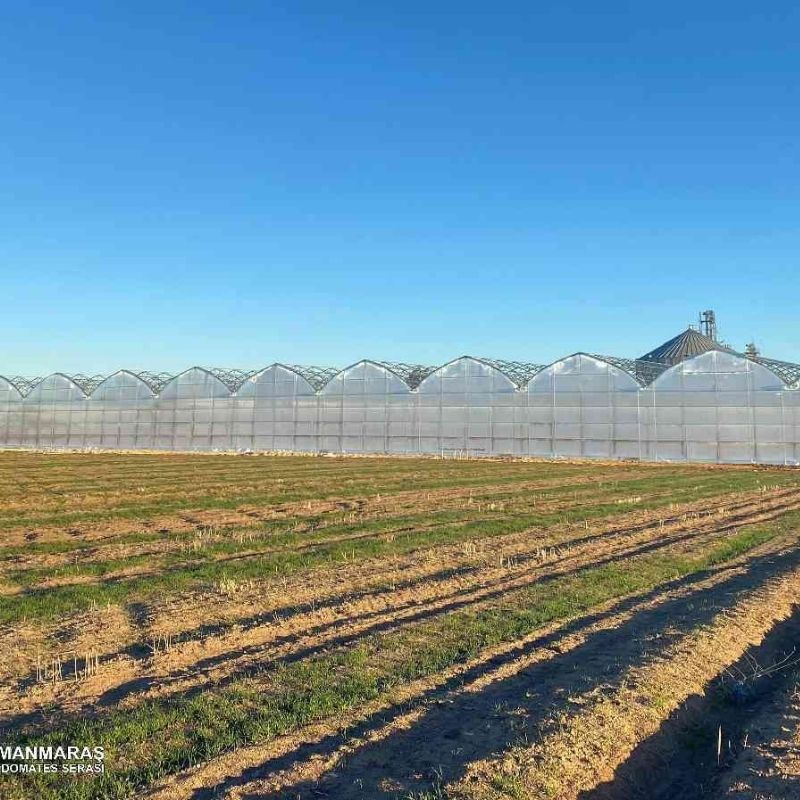
TKC SERA – KAHRAMANMARAŞ – SOILLESS TOMATO GREENHOUSE

Objective: This project involves a soil-based vegetable greenhouse established on a 9,800 m² area in the Karataş region of Adana. The goal is to increase vegetable production using modern agricultural techniques and to promote sustainable farming practices suited to the region’s climate conditions.

Vision: The Adana/Karataş Soil-Based Vegetable Greenhouse Project aims to provide healthy and high-quality produce to local consumers by enhancing vegetable production in accordance with the region’s soil structure and climate. The project also seeks to offer training to farmers in modern agricultural techniques and contribute to the local economy.

PROJECT OWNER: TKC SERA
PROJECT CONTRACTOR: İSKA GREENHOUSE SYSTEMS
ARCHITECT: ÖMER ULUDAĞ
SITE MANAGER: İSKENDER KAYA
Project Area: 12,672 m²
Project Duration: 3 MONTHS 4 DAYS
Completion Year: 2023
Greenhouse Type: Modern Gothic Greenhouse
CULTIVATED PLANT: Tomato
Soil Type: Soilless

Main Objectives:

  • Soilless Tomato Greenhouse: Establish and manage modern, high-efficiency soilless tomato greenhouses with strong technical infrastructure.
  • Training Programs: Provide farmers with training on soilless farming methods, irrigation systems, and disease control to improve productivity and quality.
  • Community Engagement: Involve the local community in the project by organizing tomato planting events and strengthening community ties.
  • Marketing & Sales Strategies: Ensure that the tomatoes produced are effectively marketed not only in local markets but also in neighboring provinces.
  • Environmental Sustainability: Focus on practices such as waste management, energy conservation, and the use of organic fertilizers to promote environmental sustainability.

Expected Outcomes:

  • Increased production of soilless tomatoes and greater availability of varieties in local markets.
  • Enhanced knowledge and skills of local farmers in soilless farming.
  • Revitalization of the local economy and greater community participation in the tomato production chain.
  • Broader adoption of environmentally sustainable practices.