Glass or Polycarbonate Greenhouses: Which Are More Efficient?
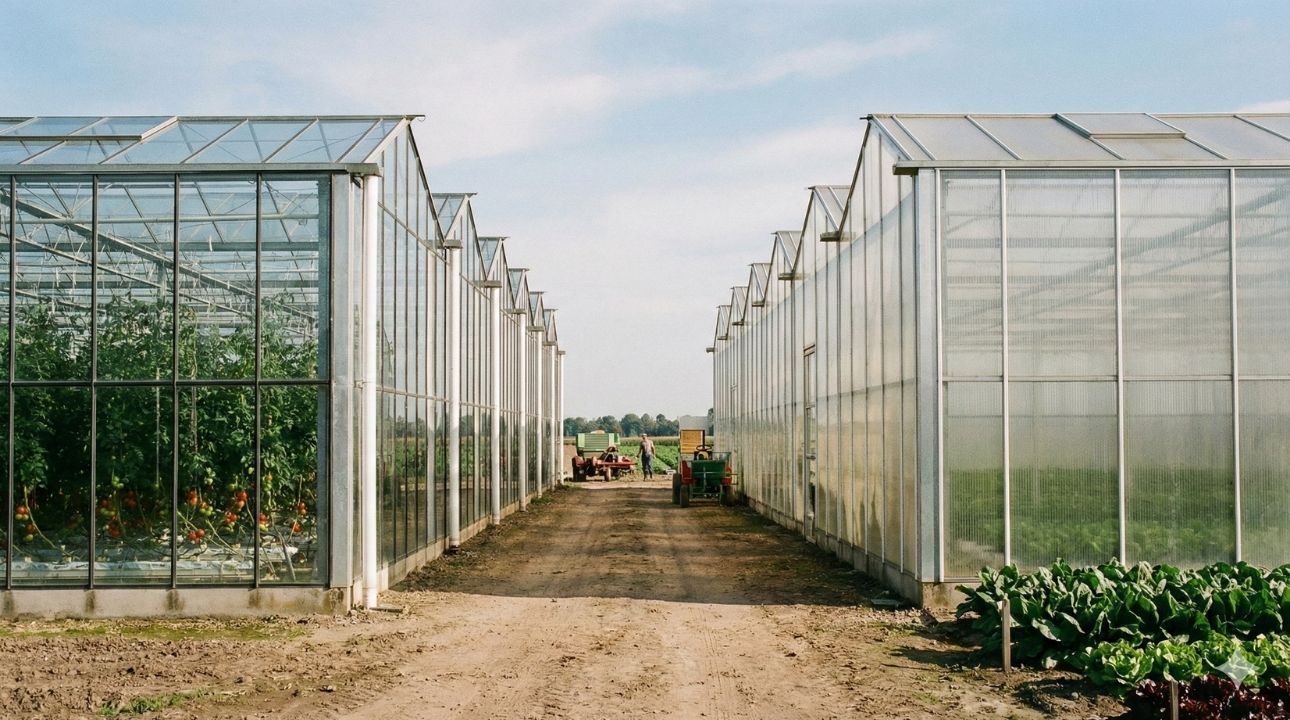
For growers planning to build a greenhouse, one of the biggest decisions is choosing the most efficient covering material. Glass and polycarbonate are the two dominant options, each offering different levels of performance, durability and operational cost. The right choice directly affects production quality, climate control and long-term investment returns.
Glass greenhouses have long been favored for their clarity and traditional aesthetic, while polycarbonate greenhouses have gained popularity in recent years due to their superior insulation properties. Both have strengths and drawbacks, and the most efficient option depends on the grower’s climate conditions, budget, production goals and crop selection.
Below is a clear comparison of the advantages and disadvantages of each material:
Advantages of Glass Greenhouses
Excellent light transmission: Glass provides almost full-spectrum natural light, ideal for light-demanding crops.
Long lifespan: When properly installed, it can remain functional for decades.
Aesthetic appeal: Preferred for both commercial and hobby use due to its clean and elegant appearance.
Resistant to chemicals: Humidity, UV exposure and fertilizers do not degrade the glass surface.
Disadvantages of Glass Greenhouses
Poor insulation: Heat loss is significantly higher compared to polycarbonate, increasing heating costs.
Impact sensitivity: Susceptible to hail, wind and physical damage.
High installation cost: Materials and labor tend to be more expensive.
Heavy structure: Requires a stronger frame, increasing construction cost.
Advantages of Polycarbonate Greenhouses
Superior insulation: Multiwall polycarbonate retains heat better, lowering energy expenses.
Impact resistant: Highly durable against hail and harsh weather conditions.
Lightweight: Easier to install and requires less structural reinforcement.
Diffuse light distribution: Spreads sunlight more evenly, reducing leaf burn and promoting uniform growth.
Disadvantages of Polycarbonate Greenhouses
Lower light transmission: Not as clear as glass, especially in lower-quality panels.
Yellowing risk: Poor-quality polycarbonate may discolor with UV exposure.
More sensitive to scratches: Requires gentle cleaning to avoid surface damage.
Which Is More Efficient?
There is no universal winner—efficiency depends on your priorities:
For cold climates with high heating costs → Polycarbonate is more efficient.
For maximum natural light transmission → Glass is the superior option.
For durability and long-term investment → High-quality polycarbonate is often preferred.
For aesthetic or hobby greenhouse use → Glass offers a more premium look.
In today’s commercial agriculture, polycarbonate greenhouses are generally more common due to their insulation benefits and durability. However, for light-sensitive crops, glass retains a strong competitive advantage.