How to Install Greenhouse Automation? A Step-by-Step Guide
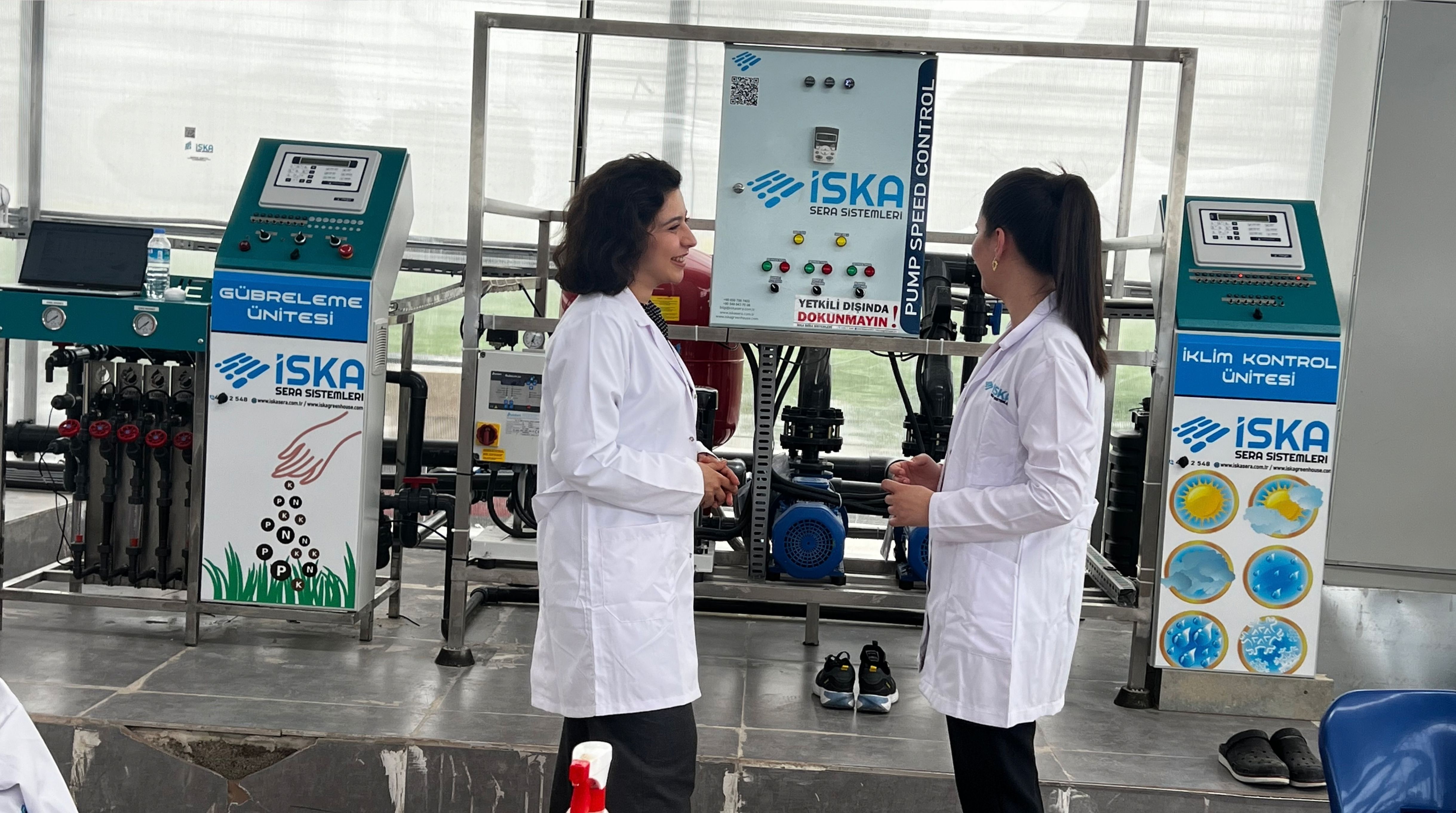
Greenhouse automation is one of the most advanced solutions used in modern agriculture to ensure high yield, energy savings, and minimal labor. These systems, powered by sensors, control panels, actuators, and software support, automate the management of temperature, humidity, ventilation, irrigation, light, and CO₂. When installed correctly, they ensure continuity in production and minimize plant stress. Here is a comprehensive guide on how to install greenhouse automation step-by-step.
Planning and Sensor Placement
The first and most critical step of greenhouse automation is planning and sensor placement. At this stage, the greenhouse structure, the type of plant to be produced, climate conditions, and energy sources are evaluated. Since sensors are the "eyes" of the system, they must be placed at the correct points.
Points to consider in sensor placement:
Sensors should be positioned near plant level and in areas away from direct sunlight.
Locations too close to ventilation outlets and inlets should be avoided.
Multiple sensor networks should be established to ensure homogeneous measurement in large greenhouses.
Wired or wireless sensor communication should be projected according to the size of the greenhouse.
Correct sensor placement ensures the system reads accurate, real-time data, which is essential for efficiency.
Main Control Unit Installation
Considered the brain of greenhouse automation, the main control unit collects data from sensors and issues commands to the necessary equipment. Through this unit, fans, ventilation windows, heating systems, irrigation pumps, and fogging units are operated automatically.
At this stage:
The electrical panel must be placed in a safe spot, away from moisture and water.
Sensor inputs and actuator outputs must be connected to the panel in an organized manner.
The user interface should be positioned where the grower can access and manage it easily.
If the main control unit is not installed correctly, automation errors occur, and the system may operate unstably.
Actuator and System Connections
This stage determines the mobility of the automation. Actuators manage equipment such as fan motors, ventilation window motors, irrigation pumps, valves, shading screens, and CO₂ systems.
Points to consider in actuator connections:
All motors and pumps must be connected via contactors and relays suitable for the control panel.
An emergency line or bypass option should be left for potential manual usage.
Water, electricity, and air lines must be safely isolated.
Thanks to correctly connected actuators, the greenhouse reacts instantly to data from sensors, ensuring an ideal climate.
Software Installation and Calibration
After the hardware is installed, the next step is software installation and calibration. This is the stage where settings determining how the system behaves are made.
At this stage:
Lower and upper limits are defined for temperature, humidity, light, CO₂, and EC/pH.
Sensors are calibrated, and measurement errors are corrected.
Automation scenarios are created according to the plant species.
Daily, weekly, and seasonal operating modes are set.
When calibration is not done correctly, plants either enter heat/humidity stress or experience growth loss due to insufficient irrigation.
System Testing and Remote Monitoring
The final stage of greenhouse automation is system testing and remote monitoring. All installed components are tested individually to verify their accuracy.
At this stage:
Sensor values are tested and tracked in real-time.
The correct operation of equipment such as fans, ventilation, irrigation, and fogging is verified.
A remote control connection is established via a mobile app or web panel.
System fine-tuning is performed if necessary.