Things to Consider When Choosing Greenhouse Plastic: A Guide to Efficiency and Durability
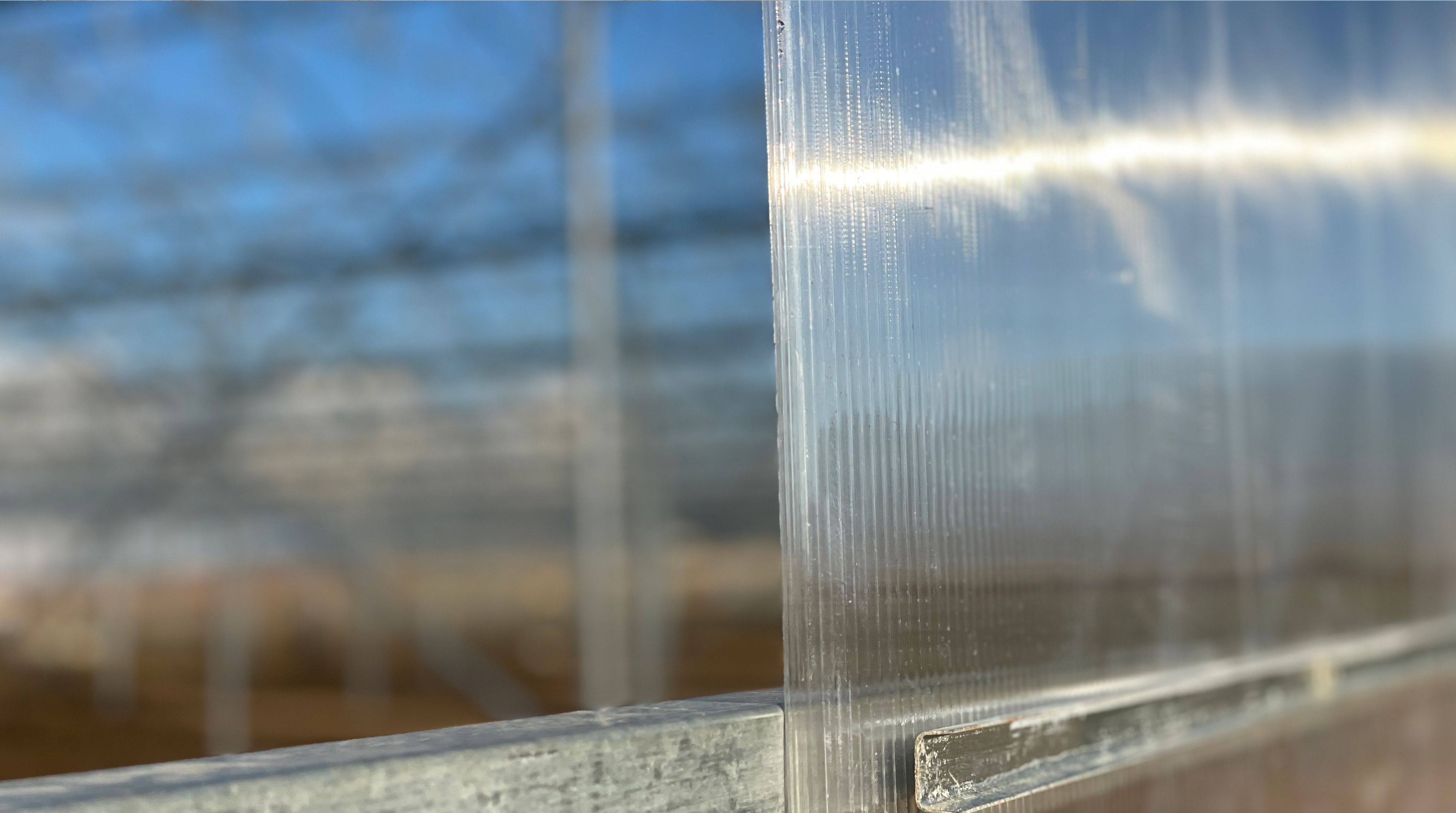
Unfortunately, the care shown to the construction when investing in a greenhouse is often not demonstrated when selecting the covering material. However, greenhouse plastic (polyethylene film) is not just a simple nylon that protects plants from the rain; it is a high-tech filter that manages light, traps heat, and preserves plant health.
Choosing the wrong plastic can lead to sunburns on plants, fungal diseases, low yields, and the rapid disintegration of the cover. So, how do you choose the right greenhouse plastic?
Let's examine the 5 essential features that must be present in a quality greenhouse cover.
1. UV Resistance (Lifespan): Shield Against the Sun
The biggest enemy of plastic is the sun. Ultraviolet (UV) rays from the sun cause standard plastics to become brittle and disintegrate in a short time. UV stabilizers are added to greenhouse plastics during the production stage. This additive determines the lifespan of the plastic. The correct choice should be made among plastics guaranteed for 12, 24, 36, or 60 months, depending on the solar intensity of your region. A plastic without UV additives might not even survive a single summer.
2. Light Management: Diffusion and Thermicity
The most important duty of the greenhouse cover is to manage light and heat.
Light Diffusion:
Transparent (clear) plastics transmit light directly, which creates shadow areas and can cause some plants to burn. Plastics with "Diffusion" additives scatter the incoming light and distribute it evenly inside the greenhouse. Thanks to this, even the lower leaves of the plants receive light, photosynthesis increases, and burns are prevented.
Thermicity (Heat Retention / IR):
This is the feature that prevents the heat accumulated during the day from escaping rapidly at night. Plastics with Thermal (IR) additives reduce the temperature difference between day and night. This lowers the risk of frost, especially in winter months, and provides up to 20% energy (heating) savings.
3. Anti-Fog/Drip Feature
The temperature difference between the inside and outside of the greenhouse causes water vapor to condense on the inner surface of the plastic (sweating). If the plastic does not have the "Anti-Drip" feature, these water droplets fall onto the plants. This situation invites fungal diseases (such as botrytis) and burns the plant as the droplets act like a lens. The Anti-Drip additive ensures that water forms a thin film on the surface and flows down the sides.
4. Mechanical Strength: Resistance to Wind and Hail
The greenhouse cover must also physically withstand the climatic conditions of the region. The plastic's flexibility, tear resistance, and impact resistance must be high. Modern plastics produced with multi-layer (co-ex) technology can be more durable than old-style thick plastics, even if they are thinner.
5. Thickness (Micron) Selection
The thickness of the plastic is measured in "microns." In conditions similar to Turkey, thicknesses between 150 and 200 microns are generally preferred depending on the region. Thicker plastic does not always mean better; what matters is the quality and correct combination of the additives mentioned above.
In conclusion; When choosing greenhouse plastic, you should not only look at the price per square meter but also at the "technological package" it contains. Selecting the right plastic containing additives suitable for your region's climate and the needs of the crop you will grow will return to you as high efficiency and low cost in the long run.